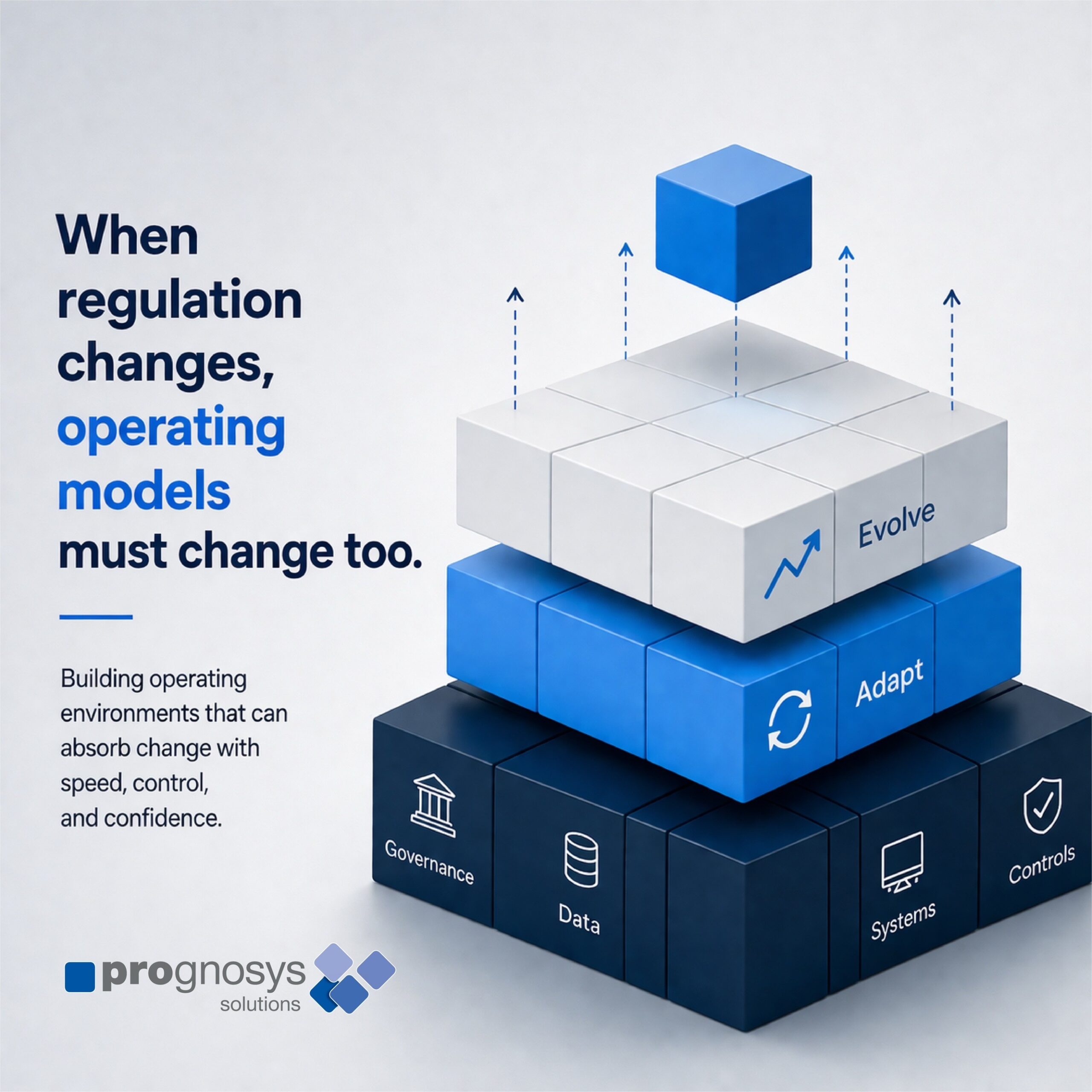
Regulatory change is often viewed through the lens of compliance. New requirements emerge, timelines are set, and attention turns quickly to interpretation, implementation plans, submissions, and readiness. These are important priorities. Yet regulatory change also does something else. It reveals how well an organisation is built to operate.
That matters because today’s regulatory environment places increasing pressure on execution. Supervisory focus across Europe continues to reinforce expectations around operational resilience, ICT capabilities, and stronger risk data aggregation and reporting. In parallel, DORA has already moved into application, making resilience, control, and response capability a live operational issue for financial entities across the EU.
In practice, periods of regulatory change tend to expose the same underlying realities. They show whether data ownership is clear or fragmented. They reveal whether reporting depends on repeatable workflows or on manual intervention. They make it easier to see whether governance works only at a formal level or whether it supports timely and coordinated action when pressure increases. They also test whether systems, functions, and teams can work together consistently as expectations shift.
This is why regulatory readiness is built internally, even when the requirement comes from outside the organisation. It depends on the strength of the operating model, the clarity of accountability across functions, the discipline of the reporting environment, the quality of data foundations, and the ability of technology infrastructure to support connected delivery. Organisations that respond well to regulatory change are often those with stronger operational maturity in place before the pressure arrives.
That maturity tends to show up in practical ways. Ownership is clearer. Data flows are better governed. Reporting processes are more stable. Collaboration between teams is more structured. Decision-making is supported by stronger visibility and fewer workarounds. In these environments, regulatory change becomes easier to absorb because the organisation has already built the internal conditions needed to respond with control and consistency.
This is also where the wider value begins to emerge. A stronger response to regulatory change can improve reporting quality, reduce friction across functions, support more resilient processes, and strengthen confidence in future transformation initiatives. The EBA’s work on reporting and supervisory convergence also reflects the continued push for better data quality, consistency, and more effective regulatory processes across the financial sector.
For modern institutions, this changes the meaning of compliance. It is not only a matter of meeting obligations. It is also a reflection of how effectively the organisation functions under scrutiny. The institutions that adapt best are often those that recognise regulatory change as an operational test as much as a regulatory one. This final point is an inference grounded in the supervisory priorities and DORA implementation context above.
At Prognosys Solutions, we support financial institutions in strengthening the structures, reporting environments, and delivery frameworks needed to respond to regulatory change with greater clarity, control, and confidence.