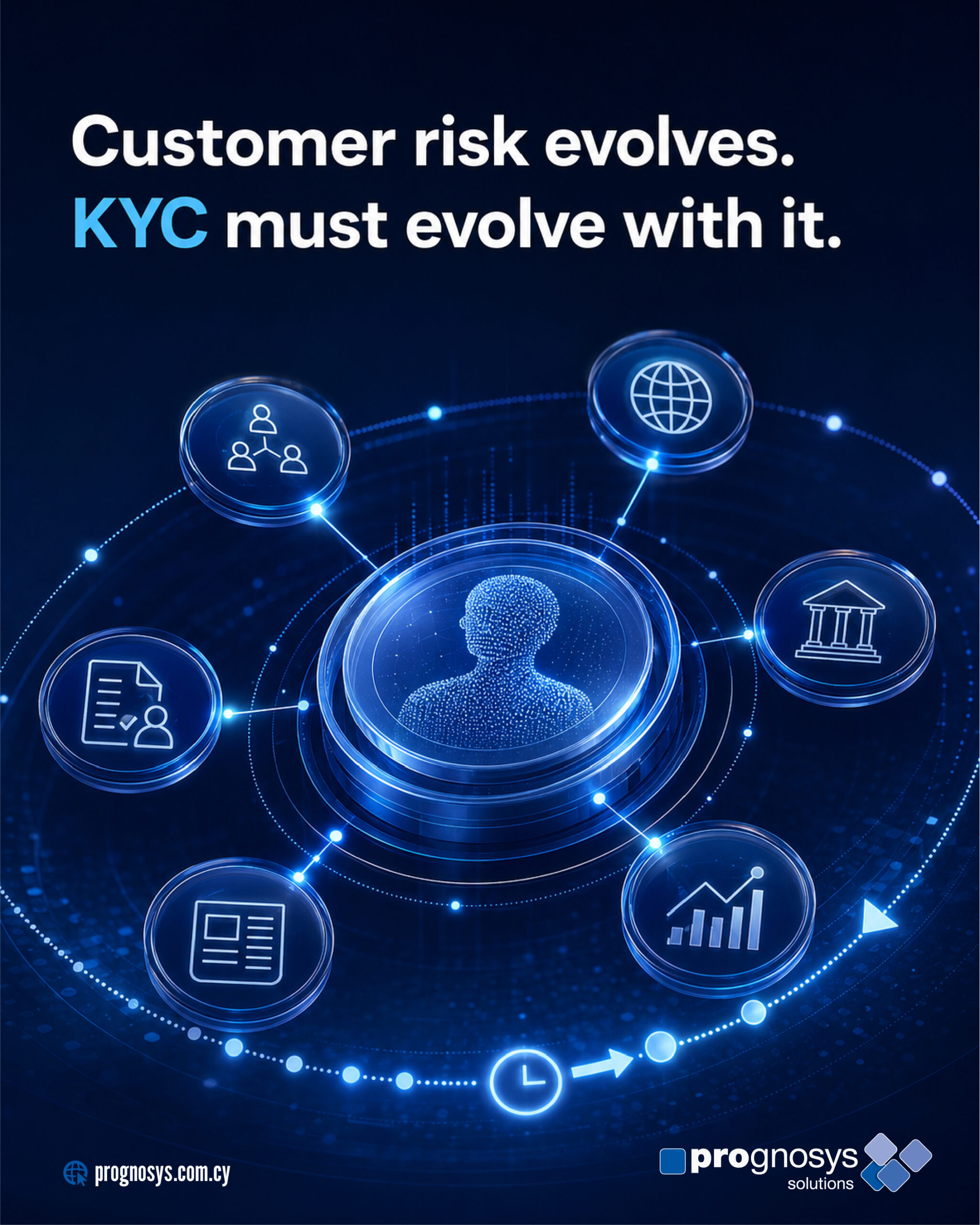
Traditional KYC processes have relied on defined stages: customer verification at onboarding, scheduled periodic reviews and additional checks when a concern arises. Yet a customer’s circumstances can change at any point during the relationship.
Changes in beneficial ownership, corporate structure, sanctions exposure, transaction activity or adverse media can materially alter a customer’s risk profile between review dates. By the time the next scheduled assessment takes place, the institution may already be working with outdated information.
This gap is driving the shift from periodic reviews to continuous KYC.
Continuous KYC applies a risk-driven approach to customer monitoring. Relevant data and risk indicators are assessed throughout the relationship, allowing significant changes to trigger a timely reassessment rather than waiting for the next review cycle.
The value lies in identifying which developments require action. Compliance teams need to distinguish material risk events from routine updates and direct each case into the correct review, escalation or approval process. Without this distinction, continuous monitoring can create additional alerts and manual work rather than improve oversight.
Effective continuous KYC therefore requires clear trigger rules, proportionate responses and a complete audit trail. Institutions must be able to demonstrate what prompted a review, which information was assessed, how the risk rating changed and why a specific decision was made.
Strong operational foundations are equally important. Connected customer data, consistent workflows and effective governance help institutions maintain a current and reliable view of customer risk. Fragmented systems can create gaps in visibility, duplicate effort and make compliance decisions harder to explain, verify and trace.
Prognosys Solutions supports financial institutions in strengthening the data, reporting and control frameworks required for continuous KYC. By connecting information, workflows and governance processes, institutions can improve the timeliness, consistency and traceability of customer risk decisions.
Continuous KYC is therefore an operational shift, rather than a change in review frequency. It requires institutions to move from fixed checkpoints towards ongoing, risk-based oversight throughout the customer lifecycle.