Sanctions compliance is becoming increasingly complex. Financial institutions must screen customers and transactions against evolving sanctions regimes while also identifying exposure that may not be immediately visible through a direct name match.
The challenge lies in the relationships behind the data.
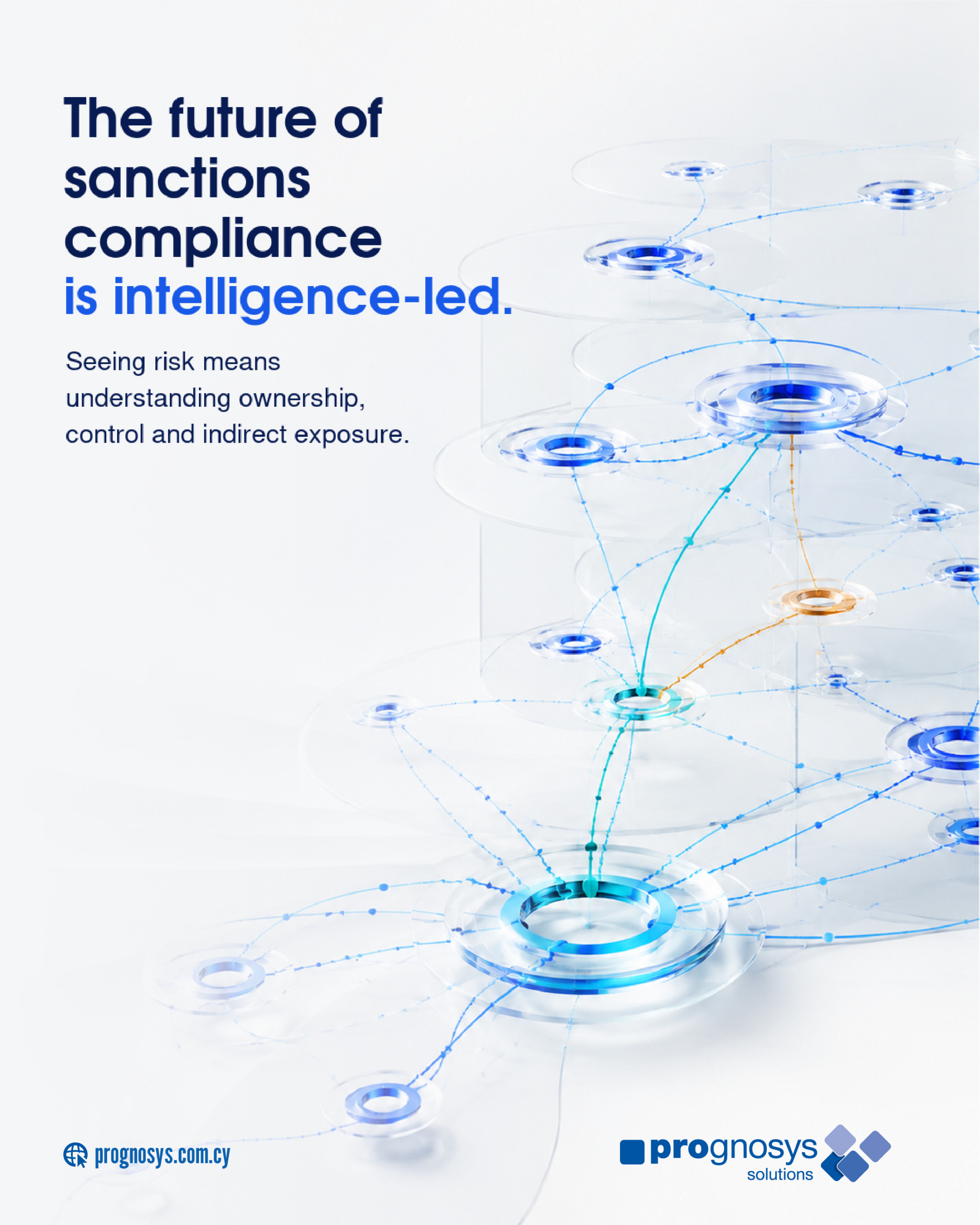
A customer may not appear on a sanctions list, yet exposure can exist through ownership structures, connected entities, intermediaries, counterparties or jurisdictions. As these relationships become harder to assess manually, traditional screening alone provides only part of the picture.
From Screening to Context
Effective sanctions compliance increasingly requires institutions to understand the context surrounding a potential risk.
This means connecting customer information with beneficial ownership, transactional activity, related parties and other relevant risk indicators. A screening alert becomes significantly more useful when investigators can establish how the parties involved are connected and assess the nature of that exposure.
Linkage analysis plays an important role here. By identifying relationships across customers, entities and transactions, compliance teams can uncover patterns that may remain hidden when information is reviewed across separate systems.
Data Quality Matters
The effectiveness of sanctions monitoring depends heavily on the quality of the underlying information.
Incomplete customer records, inconsistent entity identifiers or fragmented ownership data can make relationships difficult to identify and increase the number of alerts requiring manual review.
Strong data governance therefore becomes an important component of sanctions compliance. Institutions need reliable information, consistent processes and clear ownership of the data used for screening and investigation.
Technology Supporting Better Investigation
Technology can help compliance teams manage this complexity by bringing screening, transaction monitoring, risk profiling and relationship analysis into a connected environment.
Advanced analytics can help investigators prioritise cases and identify patterns across large volumes of information. The objective is to give compliance professionals a clearer basis for assessment and decision-making while maintaining appropriate human oversight.
Prognosys Solutions, together with its sister company Fusion Compliance Tech, co-developed the Fusion AML Suite to support this approach. The platform combines key AML and financial crime capabilities, including name screening, SWIFT filtering, transaction monitoring, risk profiling and linkage analysis.
Integrated with the Prognosys DMS Solution, it also supports KYC processes from customer onboarding through ongoing monitoring.
Building a Stronger View of Risk
As sanctions regimes and financial networks become increasingly complex, institutions need the ability to understand relationships as well as individual alerts.
The direction is clear. Effective sanctions compliance increasingly depends on connecting the right information, identifying relevant relationships and giving compliance teams the tools to investigate risk efficiently and with confidence.
For financial institutions, that means moving from isolated screening towards a clearer, intelligence-led view of sanctions exposure.